
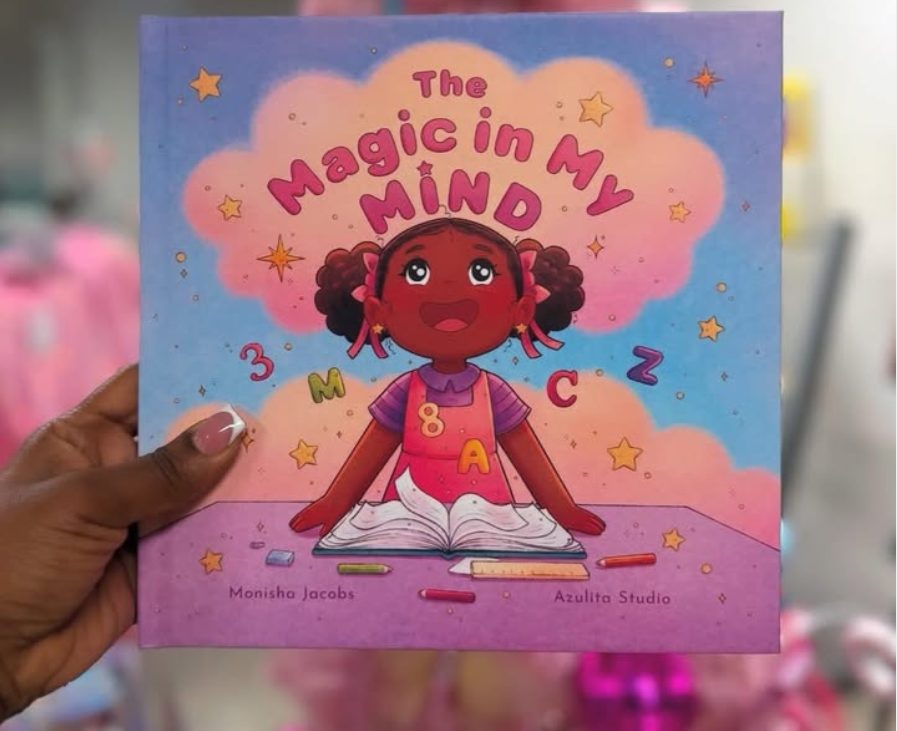
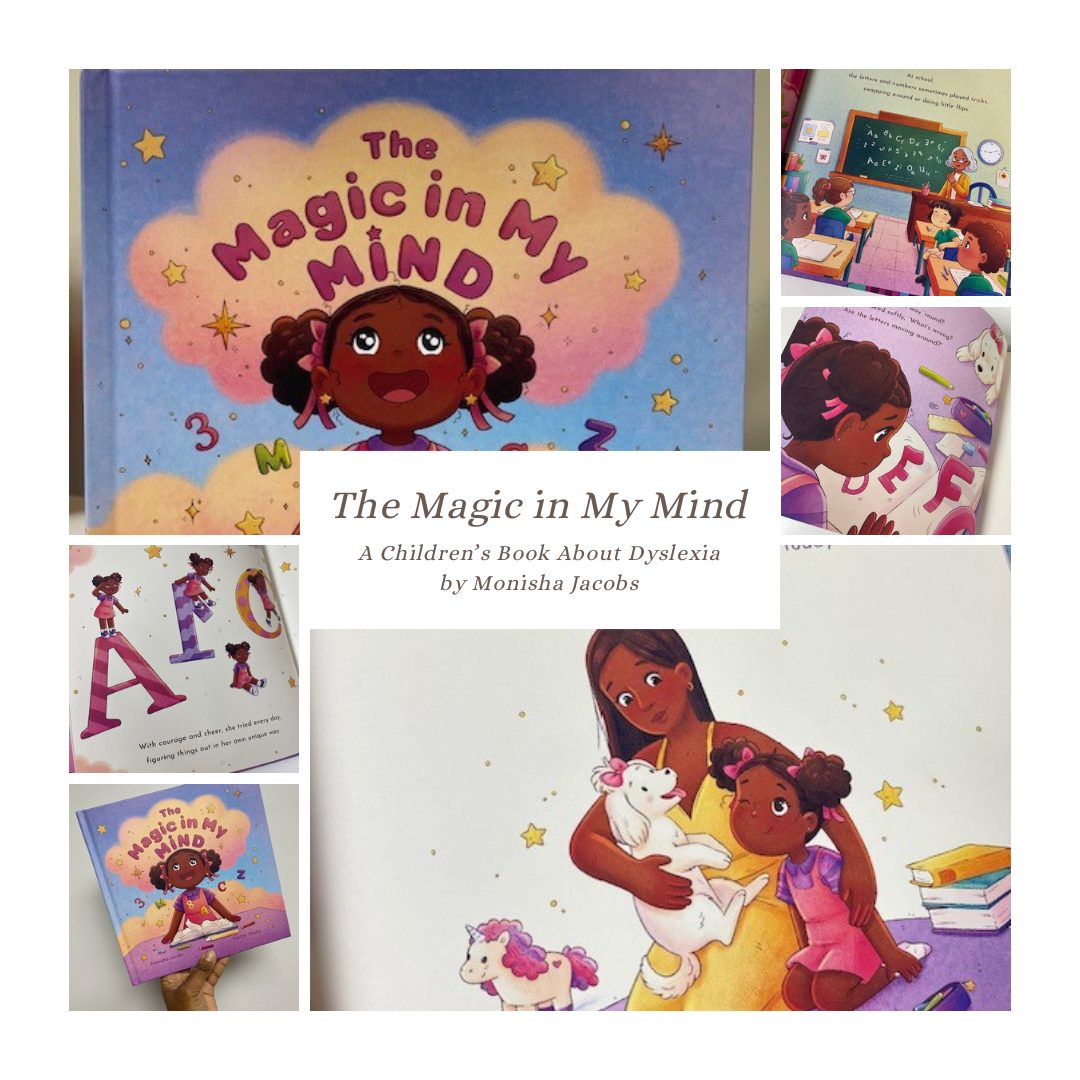
At its core, this book is about learning differences, specifically dyslexia, but it’s also about identity, self-worth, and the many ways children process the world around them. Zola experiences moments of frustration and self-doubt, emotions that will feel familiar to many children who struggle with reading or traditional learning environments. But this is not a sad and discouraging story. Instead, it offers reassurance to readers: learning differently does not mean learning less.
I think one of the most impactful aspects of The Magic in My Mind is how accessible it is. The language is clear and affirming, making it an excellent conversation starter for families, classrooms, and therapy spaces. It explains dyslexia in a way that children can understand without overwhelming them or reducing the experience to a label.
“At school, the letters and numbers sometimes played tricks, swapping around or doing little flips.”
“Zola…you don’t have to hide. You brain is amazing. It works in its own way…and guess what? That’s something to celebrate today!”
Dyslexia is a learning difference that primarily affects reading, spelling, and decoding, but it has nothing to do with intelligence. Children with dyslexia are often highly creative, intuitive, and strong problem-solvers. Still, because so much of early education centers around reading, many children internalize the idea that struggling means something is “wrong” with them. Books like this help interrupt that narrative.
What makes this story especially meaningful is its origin. Monisha Jacobs was inspired by her own daughter’s learning journey. After learning her daughter was dyslexic, Monisha wanted to create something that would build her confidence, bring her joy, and remind her that her mind is something to celebrate, not hide. That personal connection is felt on every page through the text and illustrations. Monisha brings her professional background to the story as well. She holds a Bachelor’s degree in Social Work and a Master’s degree in Special Education with a focus on Behavioral Support. Her experience as an educator shines through in the thoughtful way the book balances emotional support with age-appropriate learning awareness.
I believe there are still far too few children’s books that openly explore dyslexia and learning differences, especially in ways that center joy, pride, and self-acceptance. The Magic in My Mind helps fill that gap, offering representation for children who rarely see their experiences reflected in books and offering understanding for those who don’t share those experiences.
This is a story for children who learn differently, for parents navigating new diagnoses, and for educators who want to foster inclusive, affirming classrooms. Most of all, it’s a reminder that there is no one “right” way to learn and that every mind carries its own kind of magic.
BONUS: In the back matter, there is a word search, a maze, and fun fill-in-the-blank activity for kids!
Your turn: Have you read this book yet?
About the Author
 Monisha Jacobs is a Bermudian educator, mother, and author of The Magic in My Mind. She holds a Bachelor’s degree in Social Work and a Master’s degree in Special Education with a focus on Behavioral Support. Inspired by her daughter’s learning journey, Monisha wrote this story to help children embrace their differences, understand their strengths, and feel confident in who they are.